

As a supplier of rice stone removers, I'm often asked about how these machines work. In this blog post, I'll delve into the inner workings of a rice stone remover, explaining the principles, components, and processes that make it an essential tool in the rice processing industry.
The Basics of Rice Stone Removal
Rice stone removers are designed to separate stones, pebbles, and other heavy impurities from rice grains. These impurities can be present in harvested rice due to various reasons, such as soil contamination during the growing process or the presence of stones in the harvesting area. Removing these impurities is crucial for several reasons. First, stones can damage rice processing equipment, leading to costly repairs and downtime. Second, the presence of stones in rice can pose a safety hazard to consumers, as they can cause injury if accidentally swallowed.
The Working Principle
The basic working principle of a rice stone remover is based on the difference in specific gravity between rice grains and stones. Rice grains are relatively light, while stones are much heavier. By using a combination of air flow, vibration, and gravity, the machine can separate the two.
Components of a Rice Stone Remover
A typical rice stone remover consists of the following main components:
1. Feeding Hopper
The feeding hopper is where the rice mixture (containing rice grains and stones) is loaded into the machine. It regulates the flow of the mixture into the main processing chamber.

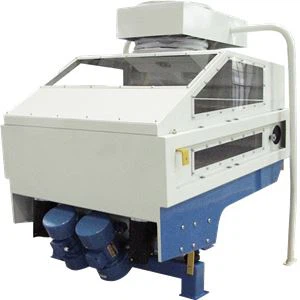
2. Air Suction System
The air suction system is a crucial part of the rice stone remover. It creates an upward air flow that helps to separate the lighter rice grains from the heavier stones. The air flow is carefully calibrated to ensure that only the rice grains are carried upwards, while the stones remain on the vibrating sieve.
3. Vibrating Sieve
The vibrating sieve is a slanted surface that vibrates to help separate the rice grains and stones. As the mixture moves down the sieve, the lighter rice grains are carried upwards by the air flow, while the heavier stones slide down the sieve towards the stone outlet.
4. Stone Outlet
The stone outlet is where the separated stones are collected and removed from the machine. This ensures that the stones do not contaminate the cleaned rice.
5. Rice Outlet
The rice outlet is where the cleaned rice grains are collected and discharged from the machine. The cleaned rice is then ready for further processing, such as polishing or packaging.
The Working Process
The working process of a rice stone remover can be divided into the following steps:
1. Feeding
The rice mixture is loaded into the feeding hopper, which regulates the flow of the mixture into the main processing chamber.
2. Air Suction
The air suction system creates an upward air flow that helps to separate the lighter rice grains from the heavier stones. The air flow is adjusted according to the type and moisture content of the rice.
3. Vibration
The vibrating sieve vibrates to help separate the rice grains and stones. The vibration helps to move the mixture down the sieve and enhances the separation process.
4. Separation
As the mixture moves down the sieve, the lighter rice grains are carried upwards by the air flow, while the heavier stones slide down the sieve towards the stone outlet. The separated rice grains are collected at the rice outlet.
5. Collection
The separated stones are collected at the stone outlet, while the cleaned rice grains are collected at the rice outlet. The stones are removed from the machine, and the cleaned rice is ready for further processing.
Types of Rice Stone Removers
There are several types of rice stone removers available on the market, each with its own unique features and advantages. Two common types are the Suction Type Gravity Stoner and the Suction Vibrating Stone Removal Machine.
Suction Type Gravity Stoner
The suction type gravity stoner uses a combination of air suction and gravity to separate stones from rice grains. It is suitable for removing stones of different sizes and densities. The machine is relatively simple in structure and easy to operate, making it a popular choice for small and medium-sized rice processing plants.
Suction Vibrating Stone Removal Machine
The suction vibrating stone removal machine combines air suction and vibration to achieve a more efficient separation of stones from rice grains. It is capable of handling a large volume of rice and can remove even the smallest stones. The machine is often used in large-scale rice processing plants where high productivity is required.
Advantages of Using a Rice Stone Remover
Using a rice stone remover offers several advantages, including:
1. Improved Quality
By removing stones and other impurities from rice, the quality of the final product is significantly improved. This makes the rice more appealing to consumers and can increase its market value.
2. Equipment Protection
Stones can cause damage to rice processing equipment, such as rice polishers and mills. Using a rice stone remover helps to protect these expensive machines from damage, reducing maintenance costs and downtime.
3. Safety
Removing stones from rice eliminates the risk of injury to consumers who may accidentally swallow them. This ensures the safety of the end-users and helps to build trust in the brand.
4. Efficiency
Rice stone removers are designed to work quickly and efficiently, allowing for a high volume of rice to be processed in a short period of time. This increases the productivity of the rice processing plant and reduces labor costs.
Conclusion
In conclusion, a rice stone remover is an essential tool in the rice processing industry. By using a combination of air flow, vibration, and gravity, it can effectively separate stones and other heavy impurities from rice grains, improving the quality, safety, and efficiency of the rice processing process. Whether you're a small-scale rice farmer or a large rice processing plant, investing in a high-quality rice stone remover is a wise decision.
If you're interested in learning more about our rice stone removers or would like to discuss your specific requirements, please feel free to contact us. We'll be happy to assist you in finding the right solution for your rice processing needs.
References
- "Rice Processing Technology" by Norman W. Watkins
- "Food Processing Handbook" by Paul Fellows