

Mini Rice Mill
Why Choose Us?
Advanced equipment
The company mainly produces rice milling machinery, and its products cover the entire process of rice initial processing from rice cleaning, stone removal, hulling, separation to rice whitening, polishing, and color selection. There are a total of 7 series and more than 130 varieties. The company has a comprehensive product development system and modern production capacity, as well as industry-leading professional process equipment and product research and development centers.
Rich experience
Yutai Jinyuan Machinery Co., Ltd. is a professional manufacturer of grain processing equipment with a 30-year history. The company has a registered capital of 10 million yuan and total assets of over 30 million yuan.
Professional team
Our company has a professional design team with many years of market experience, which has participated in the design, installation, commissioning, and service of multiple complete projects. The company has a professional installation team of more than 20 people, who can organize or allocate installation personnel at any time to improve customer progress and ensure project schedule.
High quality
For each complete set of projects, especially large-scale engineering projects, a project team will be established to design, order, purchase, produce, distribute, transport, deliver, install, debug, and supervise quality, coordinate work progress, and project team members are both independent and cooperative, enabling the entire project to proceed smoothly.
What Is a Mini Rice Mill
A mini rice mill, also known as a small-scale rice processing unit, is designed for processing and milling rice on a smaller scale compared to large industrial rice mills. Cost-effective: Mini rice mills are generally more affordable than larger, industrial-scale rice mills.
-
![Daily 15 Ton Combined Rice Mill]() Daily 15 Ton Combined Rice MillAccording to production capacity, rice processing equipment can be divided into small, medium, and large sizes. The most common small rice mill is capable of easily grinding rice to meet daily...read more
Daily 15 Ton Combined Rice MillAccording to production capacity, rice processing equipment can be divided into small, medium, and large sizes. The most common small rice mill is capable of easily grinding rice to meet daily...read more -
![Commercial Rice Mill]() Commercial Rice MillThe micro rice processing equipment is an advanced equipment that has been carefully designed and developed, integrating the functions of a rubber hulled combination rice mill. It is equipped with...read more
Commercial Rice MillThe micro rice processing equipment is an advanced equipment that has been carefully designed and developed, integrating the functions of a rubber hulled combination rice mill. It is equipped with...read more


What Does Mini Rice Mill Do
Mini rice mill is a specialized facility that processes harvested rice paddy, removing impurities, husks, and bran layers to produce polished rice grains. It plays a crucial role in transforming raw rice into the familiar white rice we enjoy on our tables.
● The essence of a mini rice mill
A mini rice mill is a specialized facility designed for the processing and refining of rice grains harvested from fields. Its primary function is to transform raw, harvested rice paddy into the polished rice grains that make their way to your table. The journey of rice through a mill involves several crucial stages:
● Cleaning and dehusking
The process begins with cleaning the harvested rice paddy to remove dirt, dust, and other impurities. Once cleaned, the outer husk of the rice grain is removed through a process called dehusking. This results in brown rice, which still retains its bran layer and germ.
● Whitening
To produce the familiar white rice that many of us are accustomed to, the brown rice undergoes further processing. In the whitening stage, a mini rice mill removes the bran layer from the rice, leaving behind the inner, starchy kernel. This process is what gives white rice its pristine appearance.
● Polishing
After whitening, the rice undergoes polishing to remove any remaining bran residue and achieve a smooth, glossy appearance. This step also enhances the rice's cooking properties and shelf life.
● Grading and sorting
Once the rice is polished, it is graded and sorted based on size, quality, and appearance. This ensures that each batch of rice meets specific quality standards and customer preferences.
● Packaging
The final stage involves packaging the rice into various formats, such as bags, containers, or bulk shipments, ready for distribution to consumers, retailers, and other businesses.
The rice milling process involves several steps to transform paddy rice into polished rice that is ready for consumption. Here is a step-by-step explanation of the process along with the names of some common instruments used:
1. Cleaning
● Winnowing - Winnowing is a method to separate impurities like straw, dust, and stones from rice. It''s done by letting the wind or a fan blow over the rice on a tray. Lighter rice grains are carried away by the wind, while heavier impurities stay behind.
● Destoner - A destoner is a machine that removes heavy stones from rice. It does this by shaking the rice, causing the stones to sink to the bottom, while the rice remains on top. This ensures that the rice is free from stones, making it safe to eat.
2. Hulling
Hulling is a process where a machine called a huller is used to take off the outer husk layer from paddy grains, which are essentially rice with their protective covering still on. When you remove this outer husk, you get what we call brown rice.
3. Whitening
After hulling, you have brown rice, but it''s not the white rice you typically see. To make it white, a machine known as a whitener comes into play. This machine has rollers with a rough surface that rub against the brown rice. This rubbing action gently removes the bran layer, which is the outer covering of brown rice. When this bran is removed, what''s left is the familiar white rice we often eat. So, whitening turns brown rice into white rice by polishing it.
4. Polishing
Polishing is the step where rice grains are given extra attention to make them look and feel better. A machine called a polisher is used for this. It''s like giving the rice grains a nice, smooth finish. This doesn''t change their taste or nutrition; it just makes them more attractive and pleasant to eat.
5. Grading and Sorting
After polishing, rice goes through two important processes to ensure it''s of high quality.
● Grading - Grading is like organising the rice grains by size. A machine called a grader is used for this purpose. It separates the rice into different categories based on their size. This is important because rice grains of the same size cook evenly and look nice when served.
● Color Sorter - To make sure every grain is perfect, another machine called a color sorter is used. This machine uses special sensors to look at each grain closely. If it spots any rice grain that looks discoloured or has some defect, it removes it from the batch. This way, only the best and most perfect rice grains make it to your plate. It''s like having an extra set of eyes to check every grain for you.
6. Packaging
Packaging Machine: A packaging machine is a device used in the rice processing industry to efficiently fill and seal rice in bags or containers. It automates the process of packaging rice, ensuring that it is securely enclosed in packaging materials for distribution and sale.
Components of Mini Rice Mill
Milling is mainly defined as a material removal process that is used to remove the unwanted material of rice. The milling process requires mini rice milling machinery, workpiece, fixture, and cutter.
The workpiece is one of the most important components of a milling machine and is secured to the fixture. It is then added to the platform inside the milling machine.
The cutter in the milling machine is packed with sharp teeth and rotates at a very high speed. It is also secured inside the milling machine. The workpiece and the cutter work simultaneously.
The material is first to feed to the workpiece which is then fed into the rotating cutter. The material is cut with the rotating cutter which then falls off as small chips to create the desired shape.
● Mini rice mill parts
Mini rice mill are available in the various sizes and shapes depending on the type of operation and the end product that has to be performed. The two most important things, the workpiece, the cutter practically remain the same in every milling process. The following are the components in the modern mini rice milling operations:
1. Base and column: This is one of the components in the milling machine that sits on the ground and is required to support the machine. It has a large column that is attached to the base and is connected to the other components.
2. Table: When the workpiece is mounted on the platform, that is called a table. It sits in a t form and is attached along its surface. It is secured with the vise and then can be clamped on the three slots directly.
3. Saddle: It is also a part of the table that allows the milling machine to move in the longitudinal motion. It can also move in the horizontal section of the workpiece in the Y direction along with other platform called the knee.
4. Knee: It supports the saddle and the table in all the milling operations. It can also be referred to as the column and aids in the vertical motion of the workpiece. It can move vertically when the cutter is stationary. When the cutter is moving in the vertical direction, then the cutter is stationary. This aids in cutting the workpiece and effective milling operation.
The Advantages of Mini Rice Mill Fabrication for the Agriculture Industry
In recent years, the agriculture industry has witnessed a remarkable transformation due to technological advancements and modernized equipment. Rice milling, a crucial aspect of the industry, has significantly benefited from innovations in machinery and fabrication techniques. The advent of mini rice mill fabrication, coupled with the expertise of rice mill fabricators , has brought about numerous advantages that have revolutionized the way rice is processed and cultivated.
Traditional rice mills often faced challenges in efficiency, productivity, and quality control. However, the integration of modern fabrication techniques in rice milling machinery has reshaped the landscape, offering several key advantages:
1. Enhanced efficiency : Mini rice mill fabricators have led to increased operational efficiency. Newer machinery is equipped with advanced features that streamline the process, reducing manual labor and processing time. This efficiency not only accelerates production but also minimizes energy consumption.
2. Improved quality control : The precision and accuracy of mini rice mill fabrication contribute to superior quality control. These state-of-the-art machines ensure consistent grain size, purity, and reduced breakage, meeting the industry's stringent quality standards.
3. Technology integration : Automation and technology integration in mini rice mill fabrication have revolutionized the industry. This technology not only facilitates remote monitoring and control but also enables the optimization of processes for better output and resource management.

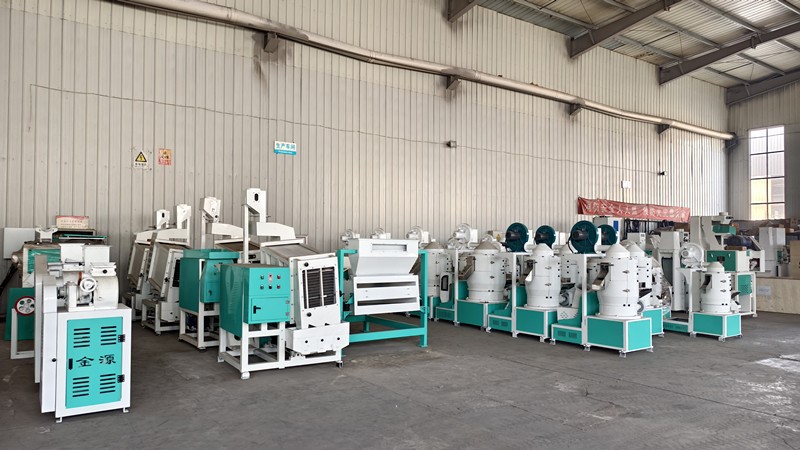
Our Factory
Yutai Jinyuan Machinery Co., Ltd. is a professional manufacturer of grain processing equipment with a 30-year history. The company has a registered capital of 10 million yuan and total assets of over 30 million yuan. It covers an area of 50000 square meters and employs more than 50 people. The company mainly produces rice milling machinery, and its products cover the entire process of rice initial processing from rice cleaning, stone removal, hulling, separation to rice whitening, polishing, and color selection. There are a total of 7 series and more than 130 varieties. The company has a comprehensive product development system and modern production capacity, as well as industry-leading professional process equipment and product research and development centers. The company has participated in the construction of large-scale complete rice milling projects both domestically and internationally, ranking among the top in comprehensive market share.


Production Equipment



FAQ
As one of the leading mini rice mill manufacturers and suppliers in China, we warmly welcome you to buy durable mini rice mill made in China here and get quotation from our factory. All customized machines are with high quality and competitive price.
detachable rice mill, portable rice hulling machine, rice milling machine mini