
Combined Rice Mill Rice Mill
Why Choose Us?
Advanced equipment
The company mainly produces rice milling machinery, and its products cover the entire process of rice initial processing from rice cleaning, stone removal, hulling, separation to rice whitening, polishing, and color selection. There are a total of 7 series and more than 130 varieties. The company has a comprehensive product development system and modern production capacity, as well as industry-leading professional process equipment and product research and development centers.
Rich experience
Yutai Jinyuan Machinery Co., Ltd. is a professional manufacturer of grain processing equipment with a 30-year history. The company has a registered capital of 10 million yuan and total assets of over 30 million yuan.
Professional team
Our company has a professional design team with many years of market experience, which has participated in the design, installation, commissioning, and service of multiple complete projects. The company has a professional installation team of more than 20 people, who can organize or allocate installation personnel at any time to improve customer progress and ensure project schedule.
High quality
For each complete set of projects, especially large-scale engineering projects, a project team will be established to design, order, purchase, produce, distribute, transport, deliver, install, debug, and supervise quality, coordinate work progress, and project team members are both independent and cooperative, enabling the entire project to proceed smoothly.
What Is a Combined Rice Mill
Combined rice mill machine is a complete set of rice processing equipment, which includes cleaning, destoning, husking, paddy separating, and milling sections. You can get edible rice from paddy only with it. The capacity can be up to 1000 kg per hour. Very strong and easy to operate. It is the most advanced combined rice mill in the present market. And the best choice for you is to start a small-scale rice milling plant. It can work with rice polishing, color sorter automatic packing machines to be a whole line. Also can process parboiled rice.
-
![Small Combination Rice Mill]() Small Combination Rice MillThis small combination rice mill is a compact all-in-one paddy processing machine, perfect for small-scale rice production needs. It finishes paddy hulling, milling, polishing and impurity...read more
-
![Complete Rice Milling Equipment]() Complete Rice Milling EquipmentYour small rice mill is stuck in a loop: slow processing, broken grains piling up, and labor costs eating into profits. You’re tired of patching together old machines and watching good rice go to...read more
-
![Large Combined Rice Mill]() Large Combined Rice MillThe rice production equipment mainly includes pretreatment equipment, processing equipment, and storage equipment. Pre processing equipment includes cleaning equipment, screening equipment, and...read more
-
![Industrial Rice Milling Machine]() Industrial Rice Milling MachineThe above is the fully automated operation process of a large rice mill, which completes the cleaning, threshing, crushing, screening, and grinding of rice through automation. While automating, it...read more
-
![Combined Rice Mill]() Combined Rice MillThe complete set of fully automatic rice milling equipment of Yutai Jinyuan Machinery Co., Ltd. realizes functions such as rice cleaning, hulling, and milling, with high automation, integrated...read more
-
![Mini Rice Milling Machine]() Mini Rice Milling MachineThe rice processing equipment of Yutai Jinyuan Grain Machinery includes the rice cleaning section, hulling separation section, rice milling and finished product sorting section. Each section is...read more
-
![Electric Rice Mill]() Electric Rice MillRice production equipment is the foundation and core of the entire production line. Different equipment has different purposes and functions, and can achieve automation and intelligence in rice...read more
-
![Rice Sheller Machine]() Rice Sheller MachineThis article introduces the machine composition of the rice hulling production line, which is a rice processing equipment of Jinyuan Grain Machinery. It includes a combination rice mill, a...read more
-
![4 in 1 Rice Milling Machine]() 4 in 1 Rice Milling MachineRice processing equipment is a finished product made from rice through processes such as cleaning, hulling, and milling. The emergence of rice processing equipment has increased the added value of...read more
-
![Combined Rice Milling Machine]() Combined Rice Milling MachineIf you’re running a small or medium rice mill in Vietnam, Malaysia, or the Philippines, you’ve probably had enough of using multiple machines to get from paddy to clean white rice. Think about...read more
-
![Rice Milling Machine For Home]() Rice Milling Machine For HomeYutai Jinyuan Machinery Co., Ltd. is located in Jining, Shandong. From research and development design, raw material selection, production welding, to national sales, our company's intelligent...read more
-
![Agritech Rice Mill Machinery]() Agritech Rice Mill MachineryAgritech rice mill machinery is a cutting-edge processing system designed to meet the demands of modern rice production, from paddy cleaning to polished rice output. Engineered for reliability and...read more


Step by Step Processes of How Rice Mill Works
Cleaning
When the rice mill receives the rice from the farmer, the first process done is cleaning. It helps to separate all impurities like straw, dust, clay, and sand. Cleaning the rice helps to increase the oil percentage in the bran.
Stone separation
Once cleaning is done, the second process is destining, in which the stones are removed. As we know, during harvesting, many stones come along with the paddy, and the removal of the same is a must.
De-husking
After cleaning and stone separation, the rice is put in the de-husking machine to separate the husk and paddy. In this process, paddy grain is passed through the abrasive surface, and due to the friction, the husk is removed from the paddy grains.
Paddy separation
During the de-husking process in the rice mill, some unhooked paddy rice remains, and the removal of the same is done by the paddy separation process.
Rice polishing
Rice polishing is usually done in the rice to remove the bran layer from the paddy either through friction polisher or abrasive.
Rice parboiling
Rice parboiling is a three-layered process in which raw rice is sowed in warm or cold water, and then steam is passed at high pressure to gelatinize the rice starch. In the third layer, the final product goes through the drying process.
Sorting of rice
Sorting of rice at the rice mill is done before packaging, and it is very necessary to sort the broken and long grains from the rice stock. After sorting, the rice is graded based on quality.
Packaging
Last but not least, the packaging is the final process, in which the rice is packaged in gunnies or plastic sacks, and thereafter it is weighed. After the above process, a seal is marked to show the weight and grade of the rice.
Features of Combined Rice Mill
Automatic Operation: Automates the process from loading paddy to producing finished white rice.
Ease of Operation: Can be operated by only 1-2 persons (one for loading raw paddy and another for packing rice).
Integrated Design: Features a compact appearance that simplifies installation and minimizes space.
Built-in Paddy Separator: Offers high separation performance and includes a "return husking" design that improves milling yield.
Innovative Emery Roll Whitening: Enhances whitening accuracy with a creative design.
High-Quality White Rice: Produces fewer broken grains and high-quality rice.
Low Rice Temperature: Minimizes bran residue due to reduced rice temperature.
Rice Grader System: Equipped with a grader system to improve the head rice yield.
Enhanced Transmission System: Extends the lifespan of wearing parts.
Control Cabinet: Includes a control cabinet for more convenient operation.
Optional Packing Scale Machine: Features auto weighing, filling, and sealing functions; manual handling is required only to grip the open mouth of the bag.
Low Investment, High Return: Offers a cost-effective solution with a high return on investment.

Why Is a Combined Rice Mill Important?
Combined rice mills play a vital role in making rice more accessible and enjoyable for everyone. Here are a few reasons why they are important:
Efficient Processing
These machines significantly speed up and improve the efficiency of rice processing compared to manual methods. They can handle large volumes of rice grains in a shorter time, helping to meet the high demand for rice.
Better Quality
Combined rice mills enhance rice quality by removing impurities and ensuring uniformity. The polished white rice produced is visually appealing and cooks evenly, providing a delicious meal every time.
Time and Labor Savings
These machines automate the laborious task of removing the husk and bran from rice grains. This automation saves considerable time and reduces the need for manual labor, making the rice milling process more convenient and cost-effective.
Increased Profitability
Rice millers benefit from improved productivity and reduced operational costs with these machines. By producing high-quality rice efficiently, they can attract more customers and increase their profitability.
Essential Maintenance Guide for Combined Rice Mills
Investing in a combined rice mill is a significant step towards efficient rice processing and maximizing productivity. However, regular maintenance is essential to ensure its performance and longevity. If you plan to buy combined rice mill, understanding its maintenance requirements will help you keep it running smoothly and avoid costly repairs. Here's a comprehensive guide on maintaining a combined rice mill.
1. Regular cleaning
● Daily cleaning: After each use, thoroughly clean the machine to remove leftover rice bits and dust. This prevents blockages and ensures smooth operation.
● Monthly deep cleaning: Once a month, perform a deep clean of all parts, including the hopper, milling chamber, and sieves. Use appropriate cleaning tools to reach all corners and crevices.
2. Lubrication
Proper lubrication is crucial for smooth operation. Regularly check and lubricate the moving parts to reduce friction and prevent wear and tear. Use manufacturer-recommended lubricants and follow the suggested schedule, usually indicated in the machine's manual.
3. Inspection of parts
● Weekly inspection: Check vital parts such as belts, rollers, and bearings for visible damage or wear. Replace any components that show significant deterioration.
● Monthly inspection: Inspect the motor and electrical components for any irregularities. Look for loose connections or signs of overheating and address these issues promptly.
4. Calibration
Regular calibration ensures the machine operates at its best. Adjust the machine settings to match the type of rice being processed, including pressure and speed. Proper calibration ensures optimal milling results.
5. Replacement of worn-out parts
Over time, some parts will wear out and need replacement. Common parts that require regular replacement include:
● Rollers and screens: These parts experience significant wear and should be replaced as needed to maintain milling quality.
● Belts and pulleys: Inspect and replace these parts if they show signs of fraying or cracking.
● Blades: Keep the blades sharp and replace them if they become dull to maintain efficiency.
6. Checking for alignment
Misalignment can lead to inefficient milling and increased wear. Regularly check the alignment of rollers, blades, and other critical components. Adjust as necessary to ensure proper alignment.
7. Safety checks
Ensure all safety features are functional. This includes checking emergency stop buttons, guards, and protective covers. Regularly test these features to ensure they provide adequate protection for operators.
8. Documentation and record keeping
Maintain a logbook to document all maintenance activities. Record the date of each maintenance task, the parts checked or replaced, and any issues addressed. This helps track the machine's maintenance history and plan future tasks.
9. Professional servicing
Even with regular maintenance, it's important to have the machine professionally serviced at least once a year. A professional technician can perform a thorough inspection, identify potential issues, and ensure the machine operates at peak performance.
Factors to Consider When Choosing a Combined Rice Mill
Capacity and throughput
Assess your production requirements and choose a machine with the appropriate capacity and throughput. Consider factors such as kilograms of rice per hour or day to determine the machine's capacity to handle your desired volume of rice efficiently.
Mill type
There are different types of combined rice mills available, including traditional and modern mills. Traditional mills are typically more suitable for small-scale or artisanal operations, while modern mills offer higher levels of automation and efficiency. Evaluate your specific needs and choose the mill type that best aligns with your production goals.
Milling technique and quality
Evaluate the milling technique employed by the machine and the resulting quality of polished rice. Look for machines that can efficiently remove the husk, bran, and germ layers while preserving the integrity and quality of the rice grains.
Whitening efficiency
Consider the whitening efficiency of the machine, which refers to its ability to remove the bran layer and produce polished white rice. Look for machines that offer high whitening efficiency to ensure the production of premium-quality rice.
Grain damage and breakage
Choose a combined rice mill that minimizes grain damage and breakage during the milling process. Excessive damage and breakage can reduce the overall quality and value of the rice. Look for machines with advanced technologies and adjustable settings to minimize grain damage.
Ease of use and maintenance
Look for a machine that is user-friendly and easy to operate. Consider intuitive controls, clear instructions, and easy maintenance procedures. Additionally, assess the availability of spare parts and after-sales support to ensure smooth operation and minimize downtime.
Durability and construction
Invest in a combined rice mill that is built to withstand the demands of rice processing. Look for machines constructed with durable materials, such as stainless steel or high-quality alloys, which can resist corrosion and maintain longevity in a manufacturing environment.
Safety features
Prioritize the safety of your operators and employees. Choose a machine with safety features such as emergency stop buttons, safety interlocks, and protective guards to prevent accidents and injuries during operation.
Cost and return on investment (ROI)
Consider the upfront cost of the machine and evaluate the potential return on investment. Assess factors such as labor savings, increased productivity, reduced waste, and improved product quality. While a higher-priced machine may offer advanced features, evaluate the long-term value it provides to your rice milling operations.
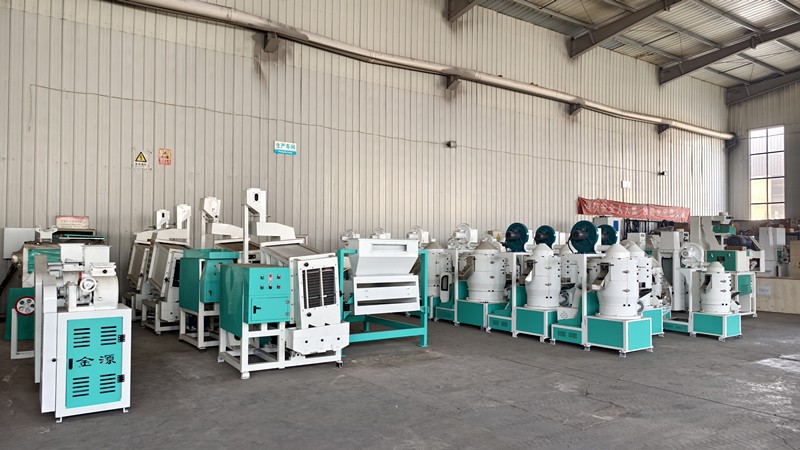
Our Factory
Yutai Jinyuan Machinery Co., Ltd. is a professional manufacturer of grain processing equipment with a 30-year history. The company has a registered capital of 10 million yuan and total assets of over 30 million yuan. It covers an area of 50000 square meters and employs more than 50 people. The company mainly produces rice milling machinery, and its products cover the entire process of rice initial processing from rice cleaning, stone removal, hulling, separation to rice whitening, polishing, and color selection. There are a total of 7 series and more than 130 varieties. The company has a comprehensive product development system and modern production capacity, as well as industry-leading professional process equipment and product research and development centers. The company has participated in the construction of large-scale complete rice milling projects both domestically and internationally, ranking among the top in comprehensive market share.


Production Equipment



FAQ
As one of the leading combined rice mill rice mill manufacturers and suppliers in China, we warmly welcome you to buy durable combined rice mill rice mill made in China here and get quotation from our factory. All customized machines are with high quality and competitive price.
rice polisher for enhancing rice market value, rice polisher for enhancing the communication in the rice supply chain, rice polisher for general rice processing