

Husker
Why Choose Us?
Advanced equipment
The company mainly produces rice milling machinery, and its products cover the entire process of rice initial processing from rice cleaning, stone removal, hulling, separation to rice whitening, polishing, and color selection. There are a total of 7 series and more than 130 varieties. The company has a comprehensive product development system and modern production capacity, as well as industry-leading professional process equipment and product research and development centers.
Rich experience
Yutai Jinyuan Machinery Co., Ltd. is a professional manufacturer of grain processing equipment with a 30-year history. The company has a registered capital of 10 million yuan and total assets of over 30 million yuan.
Professional team
Our company has a professional design team with many years of market experience, which has participated in the design, installation, commissioning, and service of multiple complete projects. The company has a professional installation team of more than 20 people, who can organize or allocate installation personnel at any time to improve customer progress and ensure project schedule.
High quality
For each complete set of projects, especially large-scale engineering projects, a project team will be established to design, order, purchase, produce, distribute, transport, deliver, install, debug, and supervise quality, coordinate work progress, and project team members are both independent and cooperative, enabling the entire project to proceed smoothly.
What Is Husker
A rice huller or rice husker is an agricultural machine used to automate the process of removing the chaff (the outer husks) of grains of rice. Throughout history, there have been numerous techniques to hull rice. Traditionally, it would be pounded using some form of mortar and pestle. An early simple machine to do this is a rice pounder. Later even more efficient machinery was developed to hull and polish rice.
Other types of huller include the disk or cono huller which uses an abrasive rotating disk to first remove the husk before passing the grain to conical rollers which polish it to make white rice; this is done repeatedly since other sides of circular side of rice are not husked. Rubber rollers may be used to reduce the amount of breakage of the grains, so increasing the yield of the best quality head rice.
-
![Gearless Rice Husker]() Gearless Rice HuskerThis machine is exclusively developed and produced by our company, with a gear free design that is low in noise and high in wear resistance. It has a stable operation with a larger feed port, a...read more
Gearless Rice HuskerThis machine is exclusively developed and produced by our company, with a gear free design that is low in noise and high in wear resistance. It has a stable operation with a larger feed port, a...read more -
![Rubber Roll Husker]() Rubber Roll HuskerIf you own a rice mill in Vietnam, Malaysia, or the Philippines, you probably deal with the same annoying problems every day when husking paddy. You spend hours running old machines that don’t...read more
Rubber Roll HuskerIf you own a rice mill in Vietnam, Malaysia, or the Philippines, you probably deal with the same annoying problems every day when husking paddy. You spend hours running old machines that don’t...read more -
![20 Ton Rice Husker]() 20 Ton Rice HuskerAs an important piece of agricultural machinery, the huller uses mechanical force to grind and process grains, thereby improving their quality and processing efficiency. Compared to traditional...read more
20 Ton Rice HuskerAs an important piece of agricultural machinery, the huller uses mechanical force to grind and process grains, thereby improving their quality and processing efficiency. Compared to traditional...read more -
![Pneumatic Husker]() Pneumatic HuskerIf you’re running a rice mill in Vietnam, Malaysia, or the Philippines, you know how frustrating paddy husking can get. You’ve probably had machines that clog up all the time, leave too much...read more
Pneumatic HuskerIf you’re running a rice mill in Vietnam, Malaysia, or the Philippines, you know how frustrating paddy husking can get. You’ve probably had machines that clog up all the time, leave too much...read more -
![Double Husker]() Double HuskerThis article introduces the classification, components, supporting equipment, processes, and pricing of rice processing equipment. The rice processing equipment includes automatic feeding...read more
Double HuskerThis article introduces the classification, components, supporting equipment, processes, and pricing of rice processing equipment. The rice processing equipment includes automatic feeding...read more


Working Mode of Automatic Rice Husker
The automatic rice husker consists of five main components: the feeding mechanism, hulling device, driving and tensioning mechanism, intelligent control system, and air separating device.
Intelligent Digital Vibration Feeding Mechanism
Feeding Mechanism: The vibration feeding part uses high-frequency (50 times/second) and low-amplitude (1.5 ~ 2.5mm) vibrations to ensure that the thickness of the rice flow into the long drip plate is uniform. This helps maintain a consistent material layer thickness across the entire length of the cots.
Long Drip Plate: The long drip plate has two main roles:
1.It accelerates the material to reach the optimal speed before entering the rubber rollers and ensures that the material is thinned out, maintaining a uniform layer as it enters the rollers.
2.It provides rectification, aligning the rice along the length of the cots in an orderly manner, which improves the shucking rate and reduces the rate of broken rice.
Advanced and Reliable Hulling Apparatus for the Hulling Room
Rubber Rollers: Rubber rollers are consumables and their wear rate can vary during use. The husker needs to adjust the speed of the rollers or switch speeds as necessary. The supporting rigid structure of the rubber rollers is crucial for mechanical performance and process efficiency. The rice husker employs a patented pneumatic supporting structure for the rubber rollers, enhancing the reliability of their operation.
Innovative Drive and Tensioning Mechanism
Drive Mechanism: The automatic rice husker uses a synchronous belt drive structure. The synchronous belt is tensioned by a spring-loaded tensioning pulley, resulting in low noise, stable transmission ratios, and no belt slippage. The multi-wedge belt drive system offers high transmission efficiency and operates at low noise levels (less than 80dB).
Husker Features
High Hulling Rate, Low Crack Rate: The machine features a well-designed line speed differential and adjustable roller pressure. It achieves a hulling rate of up to 90%, with a breakdown rate of less than 5%, and maintains stability during production.
Smooth Operation: The main rotating parts are rigorously tested to ensure stable operation and minimal vibration.
Low Roller Consumption: The machine is equipped with an effective ventilation and heat dissipation system to prevent overheating of the rollers.
Effective Husk Separation: After hulling, the raw materials are processed through an aspirator, which effectively separates the grain mixture from the bran.
Double Supporting Construction: The double supporting design prevents significant differences in roller end diameters, ensuring steady performance.

Performance of Husker
The husker processes a mixture of brown rice, paddy, rice husk, and other materials. The main task of the rice hulling section is to remove the husks from the grains to obtain pure brown rice. Most rice hulling methods worldwide use huskers that apply mechanical force to the grains to separate the husk from the brown rice. Due to the limitations of husker performance, it is not always possible to hull all grains in a single pass while ensuring that the brown rice remains intact. Consequently, the output from the husker is a mixture of grains, husks, and brown rice. To obtain pure brown rice, the husks must be separated, which significantly impacts the subsequent equipment and processes.
Rice Husking The husking process for millet is similar to that for rice and can be divided into three methods: extrusion, end pressing, and impact. Commonly used rice huskers include rubber roller huskers, rubber brick huskers, and centrifugal huskers. Each type has its characteristics:
1.Rubber Brick Husker: Offers a high husking rate and low rice breakage rate but has a smaller processing capacity and higher rubber consumption.
2.Centrifugal Husker: Provides a high husking rate but tends to have a higher rice breakage rate.
3.Rubber Roll Husker: Has a low rice breakage rate but a relatively lower husking rate.
In practice, one or more types of husking equipment should be chosen based on the characteristics of the raw grain to achieve optimal husking results.
Grain Husk Separation Shelled materials need to be separated promptly; otherwise, it will impact the output and efficiency of subsequent equipment, increase rubber and power consumption, and affect the effectiveness of the grain roughening separation. Current methods for separating millet husks include wind separation, which utilizes the different suspension velocities of husks and millet. Common equipment for this process includes suction separators, circulation separators, and vertical suction ducts. Typically, a rubber roll husker includes an integrated husk separator, whereas a centrifugal husker may require an additional separator.
Grain Rough Separation After husk separation, the goal is to obtain pure millet for rice milling, while unshelled grains are returned to the husker for further processing. Differences in physical properties such as density, surface friction coefficient, elasticity, and particle size between millet and brown millet are utilized to select appropriate equipment for rough separation. Commonly used equipment includes rotary screens, gravity separators, and impact separators. Due to the small particle size and poor particle size uniformity of millet, a gravity millet separator can be effective. This separator uses the different densities of millet and brown millet, with a bidirectional tilting vibration separation plate to achieve good separation results.
Here are five mistakes to avoid and tips for ensuring the best outcomes at your rice mill:
1. Overloading the "pre-cleaning" section
One of the most common problems in rice mills is putting too much load on the pre-cleaning section, which can lead to fine dust or stones contaminating the destoning machine. This can cause screens to become clogged and affect the performance of the destoning machine.
To avoid this, it's important to monitor the capacity and make adjustments as needed to prevent overloading. Regular cleaning of the pre-cleaning section is also crucial to maintain its efficiency.
2. Not having the appropriate "bran removal system" for your mill
Lot of rice millers focus on the whitener but they forget to give attention to the bran process system that is connected to the whiteners or the silky machine. A common mistake is not removing the bran properly in each pass, which can cause uneven pressure on the rice grain. This can result in the grain being held in the whitener for too long, leading to friction, low polish and excess heat that softens the grain and increases breakage.
To prevent this, the appropriate Bran Process System(BPS) needs to be attached in the mill without compromising power or blower capacity.
Regular cleaning and maintenance of the whitening and polishing section can also help to prevent issues.
3. Not having "regular and proper maintenance" in the rice mill
Cleaning & maintenance is a vital part of the milling process, but it's often neglected. Neglecting to clean the pre-cleaning section, for example, can result in the same issues discussed in mistake #1.
In the whitening and polishing section, not cleaning properly can lead to clogged screens and poor sanitation, which can increase the temperature in the milling chamber and cause rice grain to soften and break more easily. Make sure to follow proper cleaning procedures at every stage of the milling process to maintain performance and efficiency.
The best practice for rice mill maintenance is 1 day of maintenance for 29 days of running your rice mill in a month.
4. Not changing spare parts on time or using duplicate spares
A running rice mill has a few wear- out parts or consumables, such as grinding stones in the whitening section, pre cleaner screens, vibro destoner screens, rubber rolls in the pneumatic sheller, whitener screens, silky milling rollers etc, all have their lifespan.
Using them beyond this lifespan can cause several performance issues, including longer milling times and increased breakage, over-polishing, and scratching of the grain and also in some case, permanent damage to the machine.
To avoid this, make sure to replace wear parts in a timely manner to maintain their efficiency and prevent performance issues. Duplicate spare parts also play a major role in depreciating the quality of rice as well as the machine performance.
5. Improper drying techniques
To produce top-quality rice, it is important to avoid improper drying techniques that can cause the grain to become fissured and prone to breakage. To prevent this, make sure to dry the paddy evenly and thoroughly while monitoring temperature and relative humidity levels to avoid over-drying or rewetting. The usual humidity level of the paddy after raw paddy drying or parboiled drying should be 12-15% in the paddy.
Proper storage and handling of paddy after harvest is also crucial in minimizing fissuring and achieving optimal results at the mill.
6. Inexperienced operators/workers in your rice mill
Our machines are only as good as the people operating them. An experienced operator running our machines can give you even better results.
To produce top-quality rice, it is absolutely essential to have experienced rice mill operators in your mills as opposed to short term solutions or contract workers. An experienced operator in your mill will take care of preventive maintenance, timely spare part changes, machine settings, aspiration settings and will save money as well as time for the rice miller.
To achieve the best results, it's important to pay close attention to your rice mill, practice good hygiene, clean it and maintain it regularly from time to time. By avoiding common mistakes and taking the appropriate measures, you can guarantee a smoothly running mill operation and the production of top-notch quality rice.
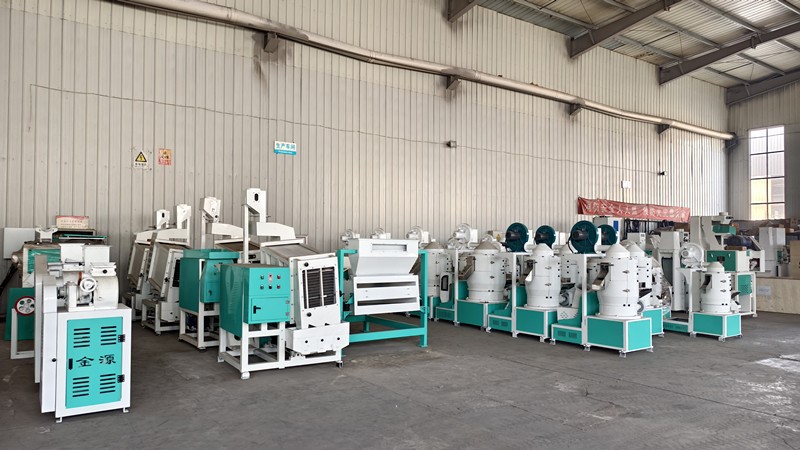
Our Factory
Yutai Jinyuan Machinery Co., Ltd. is a professional manufacturer of grain processing equipment with a 30-year history. The company has a registered capital of 10 million yuan and total assets of over 30 million yuan. It covers an area of 50000 square meters and employs more than 50 people. The company mainly produces rice milling machinery, and its products cover the entire process of rice initial processing from rice cleaning, stone removal, hulling, separation to rice whitening, polishing, and color selection. There are a total of 7 series and more than 130 varieties. The company has a comprehensive product development system and modern production capacity, as well as industry-leading professional process equipment and product research and development centers. The company has participated in the construction of large-scale complete rice milling projects both domestically and internationally, ranking among the top in comprehensive market share.


Production Equipment



FAQ
As one of the leading husker manufacturers and suppliers in China, we warmly welcome you to buy durable husker made in China here and get quotation from our factory. All customized machines are with high quality and competitive price.