

In today's modern grain processing industry, the corn peeling machines plays an essential role in improving production efficiency and product quality. It is widely used to remove the outer skin or bran layer of corn kernels before further processing, such as milling, fermentation, or food production. Understanding how this machine works helps optimize operations and enhance the value of agricultural products.
Structure Overview
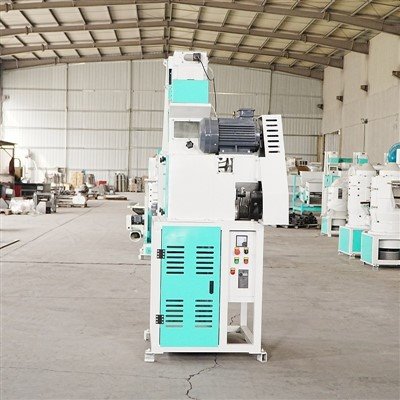
A corn peeling machines typically consists of a feeding system, peeling chamber, separation mechanism, discharge system, and power transmission unit.
The feeding system delivers corn kernels evenly into the peeling chamber.
The peeling device, which includes emery rollers, grinding discs, or blades, performs the actual removal of the outer skin through friction or cutting.
The separation system distinguishes the peeled kernels from the removed husks or bran.
The discharge system collects and outputs both peeled corn and separated husks for further processing.
The entire operation is driven by an electric motor or diesel engine, using a belt or gear transmission to power the peeling components.
Working Principle
When corn enters the peeling chamber, the corn peeling machines uses rotating emery rollers or grinding discs to generate friction and pressure on the kernel surface. Under the combined effect of centrifugal force and abrasion, the corn husk is stripped off while the kernels remain intact.
A built-in airflow or sieving system then separates the loosened husks from the clean kernels, achieving a uniform and smooth peeling result.
Advanced models are equipped with pressure adjustment mechanisms, allowing operators to modify peeling intensity according to the corn's moisture level and variety. This control minimizes kernel breakage, preserves nutritional value, and increases the overall yield rate during milling or starch production.
Advantages and Applications
Compared with traditional manual or semi-mechanical methods, the corn peeling machine offers significant benefits:
Uniform Peeling – Consistent friction ensures a smooth and clean surface.
High Productivity – Continuous operation supports large-scale grain processing lines.
Low Loss Rate – Kernel breakage is typically below 2%, maintaining high output quality.
Wide Applicability – Suitable for both dry and wet corn, as well as other grains like wheat and sorghum.
These machines are widely used in grain processing plants, food factories, feed production, and ethanol or starch manufacturing, serving as a critical component in automated grain processing systems.
Conclusion
In summary, the corn peeling machine operates based on mechanical friction, centrifugal separation, and airflow classification to efficiently remove the corn husk while maintaining kernel integrity. It not only enhances automation and productivity in grain processing but also supports the sustainable development of the agricultural industry.
With advancements in intelligent control and eco-friendly technology, future corn peeling machines will continue to evolve toward greater energy efficiency, automation, and durability - helping shape the next generation of smart agricultural processing equipment.