

Southeast Asia's rice farms, ranging from smallholder plots in Vietnam to medium-scale mills in the Philippines and Indonesia, demand rice polishers tailored to tropical climates, low breakage rates, and regional regulatory standards. Choosing the right model hinges on matching capacity, durability, and compliance with local food safety rules-here's the guide for Southeast Asian rice growers.
Key Traits for Southeast Asian Compatibility
Rice polishers for this region must address three core needs, aligned with Indonesia's updated 2024 National Food Security Law and global ISO 22000 certification. First, low broken rice rates (no more than 0.8% increment per GB/T 25227-2023 standards) to preserve high-value long-grain varieties like jasmine rice. Second, temperature control to counter tropical heat and avoid grain spoilage, with built-in blowers or ventilation systems. Third, dust & moisture management, a legal requirement in Indonesia for commercial mills to reduce processing losses and ensure food safety. Smallholder farms also prioritize easy maintenance and flexible power options for off-grid areas.
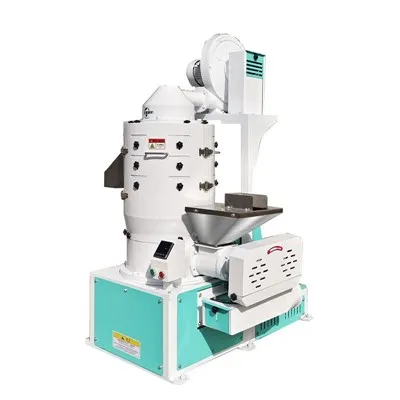

Top Polisher Types for Different Farm Scales
1. Small-Scale Farms (Vietnam/Philippines Smallholders)
Compact vertical friction polishers are ideal, with 2-5 t/h capacity, low power use, and vertical grain flow that cuts milling temperatures. Mini models like YANMAR YCP220 (600-900 kg/h) feature external pulleys for quick belt checks and carburizing steel parts for durability-perfect for small plots with basic maintenance needs. Dry-type polishers are also a budget pick for light polishing, with simple operation and low upfront costs (US$410-780).
2. Medium-Scale Mills (Indonesia/Malaysia)
Dual-roller polishers deliver 8-15 t/h capacity, dual-blower systems for dust control, and uniform bran removal-meeting Indonesia's dust recovery mandates. Mist-type polishers add a water mist layer for brighter, market-ready rice, boosting commercial value for export-focused mills. These models also offer easy residual grain discharge, cutting downtime for busy processing lines.
Why Regional Compliance Matters
Southeast Asia's evolving regulations make certified equipment a non-negotiable. Indonesia's 2024 law requires all commercial polishers to have dust recovery and moisture control functions, while ISO 22000 certification streamlines export to regional and global markets. Choosing compliant models avoids regulatory fines and ensures access to premium rice markets in the region and beyond.
In short, Southeast Asian rice farms thrive with polishers that balance scale, tropical durability, and local rules-smallholders benefit from compact, low-maintenance models, while medium mills need high-capacity, compliant machines to boost quality and export potential.