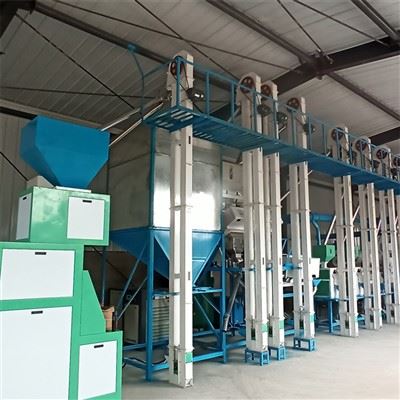
The following are several common faults and solutions of the equipment during use organized by Jinyuan Machinery for everyone:
1. The hopper belt slips
2. The hopper belt runs off center
3. Excessive material return
4. The hopper belt is torn


1. The hopper belt slips
The bucket elevator uses the friction torque between the hopper belt and the head wheel drive shaft to lift materials. If the tension of the hopper belt is insufficient, it will cause the hopper belt to slip. At this point, the machine should be stopped immediately and the tensioning device adjusted to tighten the hopper belt. If the tensioning device cannot fully tension the hopper belt, it indicates that the stroke of the tensioning device is too short and should be readjusted.
The correct solution is to untie the hopper belt joint, adjust the tension device on the bottom wheel to the highest position, insert the hopper belt from the elevator head, pass through the head wheel and bottom wheel, and connect the head and tail, so that the hopper belt is in a tensioned but not tensioned state. Then fully tighten the tensioning device. At this time, the unused tensioning stroke of the adjusting screw of the tensioning device should not be less than 50% of the full stroke.
2. The hopper belt runs off center
The improper installation of the head and bottom wheel transmission shafts is mainly reflected in the following aspects:One is that the transmission shafts of the head wheel and the bottom wheel are in the same vertical plane and not parallel;Secondly, both transmission shafts are installed in a horizontal position and not in the same vertical plane;The third is that the two transmission shafts are parallel, in the same vertical plane, and not horizontal.
At this point, the deviation of the hopper belt can easily cause collision between the hopper and the barrel, as well as tearing of the hopper belt. The machine should be stopped immediately to troubleshoot. Ensure that the transmission shafts of the head and bottom wheels are installed in the same vertical plane and in a horizontal position. The vertical deviation of the machine centerline at a height of 1000mm should not exceed 2mm, and the accumulated deviation should not exceed 8mm.

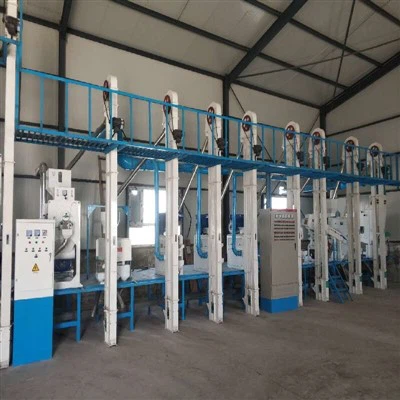
3. Excessive material return
In lifting operations, if there is too much material return from the hoist, it will inevitably reduce production efficiency, increase power consumption and material crushing rate. The reasons for excessive material return are as follows:
(1) The running speed of the hopper is too fast, and the hoist lifts different materials. The running speed of the hopper varies: generally, when lifting dry powder and granular materials, the speed is about 1-2m/s; When lifting block materials, the speed is 0.4~0.6m/s; When lifting wet powders and granules, the speed is 0.6~0.8m/s. Excessive speed leads to early unloading, resulting in material return. At this time, the speed of the hopper should be appropriately reduced according to the lifted material to avoid material return.
4. The hopper belt is torn
The hoist hopper belt is usually a canvas belt, and sometimes tape and chains are also used. Under the combined effect of various faults, canvas and tape are prone to tearing, which is one of the most serious faults. The process of deviation and detachment of the general hopper belt is most likely to cause tearing of the hopper. It is necessary to promptly and comprehensively investigate the cause and eliminate the fault. In addition, the inclusion of foreign objects with sharp edges in the material can also cause the hopper belt to crack. Therefore, in production, steel wire mesh or magnet should be installed at the feed inlet to prevent large foreign objects from falling into the machine base.