


Products Description
The indented cylinder separate head rice length classifier is a modern agricultural machine used to classify rice based on its length. The system uses an indented cylinder with a separate headpiece.Its structure mainly includes screening devices, transmission devices, motors, and other components. The sieve device is the core part of the classifier. Depending on the specifications, the aperture size of the sieve can be adjusted to screen rice of varying lengths. The transmission device transfers the motor's power to the sieve, causing it to vibrate and thereby achieving the classification of rice. Electric motors serve as the power source.
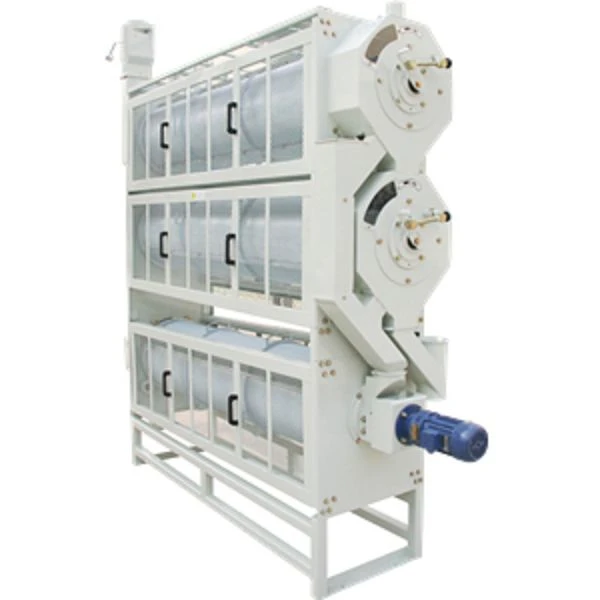
The working principle of a rice length classifier is to use the vibration of the sieve to separate rice by length. As rice passes through the sieve, shorter grains will fall through the apertures, while longer grains will be blocked by the sieve, thus achieving the classification of rice by length.
The advantage of a rice length classifier lies in its high degree of automation, allowing for continuous operation and improved production efficiency. Additionally, the use of screen vibration for classification is both accurate and reliable, meeting various production needs.
Rice length classifiers have a wide range of usage scenarios, including rice processing plants, grain storage warehouses, supermarkets, and more. In these settings, they effectively classify rice, enhancing both its quality and value, while also improving production efficiency.
Product Material
1.Indented Cylinder: High-grade stainless steel 304, featuring excellent corrosion resistance, wear resistance, and food-grade safety to ensure no contamination to rice and long service life.
2.Machine Frame: Heavy-duty carbon steel with electrostatic spray coating, which enhances rust prevention and structural stability, suitable for long-term continuous operation in factory environments.
3.Transmission Components: High-strength aluminum alloy and hardened steel parts, reducing friction loss and ensuring smooth, low-noise operation during the classification process.
4.Screen Mesh: Wear-resistant nylon mesh with precise pore size, providing secondary filtration of small impurities without blocking the cylinder indentations.
Production Process
1.Raw Material Preparation: Select qualified stainless steel, carbon steel, and aluminum alloy materials, and conduct strict quality inspection to ensure they meet material standards.
2.Component Machining: Process the indented cylinder via CNC lathe for precise indentation; cut and weld the machine frame according to design drawings, followed by polishing to remove burrs.
3.Surface Treatment: Carry out electrostatic spray coating on the carbon steel frame and passivation treatment on the stainless steel cylinder to enhance corrosion resistance.
4.Assembly: Assemble the cylinder, transmission system, motor, and outlet components in sequence; install the frequency converter and control panel, and conduct initial debugging of the machine's operation.
5.Testing & Calibration: Run the machine with test rice samples, adjust the cylinder speed and outlet baffle angle to achieve the optimal grading accuracy; conduct a 72-hour continuous operation test to verify stability and performance.
6.Packaging & Delivery: Clean the machine thoroughly, wrap it with moisture-proof film and wooden cases, and attach a detailed operation manual and quality certification before shipment.
FAQ
Q: What types of rice can this classifier handle?
A: The machine is suitable for grading various rice varieties, including long-grain rice, medium-grain rice, and short-grain rice. By adjusting the cylinder rotation speed, it can adapt to different grain length requirements.
Q: How to ensure the food safety of the machine during rice processing?
A: The core components in contact with rice are made of food-grade stainless steel 304, which meets FDA and EU food safety standards. The surface treatment process does not contain harmful substances, avoiding any contamination to the rice.
Q: What is the difference between this indented cylinder classifier and traditional screen classifiers?
A: Compared with screen classifiers, this machine uses indentations to sort rice by length, which has higher grading accuracy and less damage to rice grains. It can effectively separate small broken grains that are difficult to be sorted by screen classifiers.
Q: How often does the machine need maintenance?
A: For daily use, it is recommended to clean the cylinder and screen mesh after each shift. A comprehensive maintenance (including lubricating transmission components and checking for worn parts) should be conducted every 3 months to ensure long-term stable operation.
Hot Tags: indented cylinder separate, China indented cylinder separate manufacturers, suppliers, factory, 150 series white rice graded, indented cylinder separate headrice, short grain white rice, non glutinous white rice, medium grain white rice, long grain white rice


