

Do medium rice mills require professional operators?
As a supplier of medium rice mills, I've often been asked whether these machines need professional operators. This is a crucial question for rice mill owners, as the answer can significantly impact the efficiency, safety, and profitability of their operations. In this blog, I'll delve into the reasons why professional operators are often essential for medium rice mills.
Medium rice mills are complex pieces of equipment designed to process paddy rice into polished rice efficiently. They typically consist of multiple components, including a cleaning unit, a huller, a separator, a polisher, and a grading system. Each of these components plays a vital role in the rice - processing chain, and improper operation can lead to a range of problems.

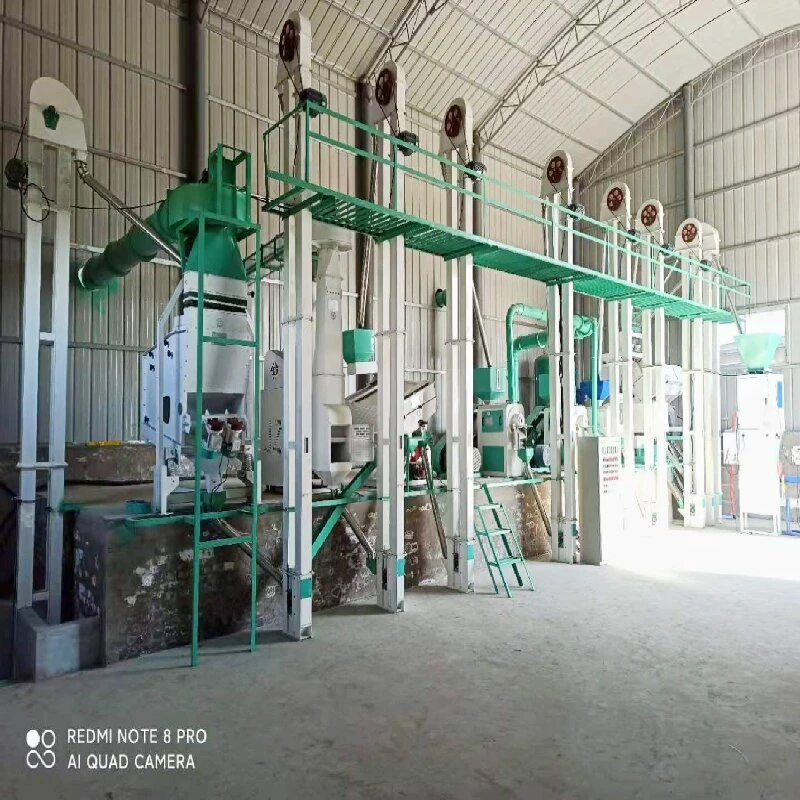
Firstly, let's consider the technical complexity of medium rice mills. These machines are equipped with advanced technology to ensure high - quality rice processing. For example, modern hullers use precise pressure control to remove the husk from the paddy without damaging the rice kernel. A professional operator understands how to adjust these settings according to the type and quality of the paddy being processed. Without proper knowledge, an inexperienced operator may set the pressure too high, resulting in broken rice, or too low, leaving the husk partially intact.
The separator is another critical component that requires professional handling. It separates the brown rice from the husk and other impurities. A professional operator knows how to optimize the airflow and vibration settings of the separator to achieve maximum separation efficiency. Incorrect settings can lead to poor separation, with a significant amount of impurities remaining in the brown rice or, conversely, good rice being discarded along with the waste.
When it comes to the polishing stage, the operator's skill is even more crucial. The polisher removes the bran layer from the brown rice to produce white, polished rice. The amount of polishing required depends on market demand and the quality of the brown rice. A professional operator can adjust the polishing time and pressure to achieve the desired level of polish, ensuring that the rice meets the market standards while minimizing breakage.
In addition to technical proficiency, professional operators are also trained in safety procedures. Medium rice mills involve high - speed rotating parts, sharp blades, and electrical components. A single mistake in operating these machines can lead to serious injuries. Professional operators are aware of the safety risks associated with each component of the rice mill and are trained to follow strict safety protocols. They know how to properly maintain the machines, including regular cleaning, lubrication, and inspection, to prevent malfunctions and accidents.
Moreover, professional operators can contribute to the overall efficiency of the rice - milling process. They are able to troubleshoot problems quickly when they arise. For instance, if there is a blockage in the conveyor system or a sudden drop in the output of the mill, a professional operator can identify the root cause and take appropriate measures to resolve the issue. This reduces downtime and ensures continuous production, which is essential for the profitability of the rice - milling business.
Let's take a look at some specific models of medium rice mills that we offer. Our 20 Tons Combined Rice Mill is a popular choice for medium - sized rice - milling operations. It is designed to handle up to 20 tons of paddy per day, with a high - level of automation. However, even with its advanced features, it still requires a professional operator to ensure optimal performance. Similarly, our 50 Tons Combined Rice Mill is a more powerful machine capable of processing larger volumes of paddy. The complexity of its operation means that a professional operator is indispensable for getting the most out of this machine.
Now, some may argue that modern medium rice mills are becoming more user - friendly and automated, and that non - professional operators can learn to operate them with a little training. While it is true that technological advancements have made the operation of rice mills easier, there is still a significant difference between basic operation and professional operation. A non - professional operator may be able to run the machine on a day - to - day basis, but they may not be able to optimize the settings, troubleshoot complex problems, or ensure long - term reliability and safety.
In conclusion, medium rice mills do require professional operators. The technical complexity of these machines, the need for high - quality output, and the importance of safety all point to the necessity of having skilled operators. As a supplier of medium rice mills, we highly recommend that our customers invest in professional training for their operators or hire experienced professionals. This will not only improve the efficiency and quality of the rice - milling process but also ensure the long - term success of their business.
If you are in the market for a medium rice mill or are interested in learning more about our products, we encourage you to get in touch with us. We have a team of experts who can provide you with detailed information and guidance on choosing the right rice mill for your needs. Whether you are a small - scale farmer looking to upgrade your milling equipment or a large - scale rice - processing business, we can offer you the best solutions. Contact us today to start a productive conversation about your rice - milling requirements.
References
- "Rice Processing Technology" by Norman S. Mattson and Robert F. Dilday.
- Industry reports on rice mill operations and best practices.